Here's the short version: hybrid event production services cover everything required to run your in-person event and its live virtual broadcast as one show — pre-event planning, the camera and audio package, video switching and graphics, stream management, virtual audience support, crew, and a recording you can reuse afterward. A complete package means you shouldn't be assembling five vendors or discovering gaps on event day.
I run hybrid productions across Dallas-Fort Worth every month, and the most common question I get from planners comparing vendors is some version of "what am I actually paying for?" Fair question — hybrid quotes can look wildly different because scopes differ, not because someone's ripping you off. This post breaks down what a real hybrid event production service includes, line by line, so you can compare proposals on substance instead of price alone. If you want the bigger-picture view of how hybrid works and what it costs, start with my guide to hybrid event production — this post is the scope-of-work companion to it.
Every hybrid package worth hiring starts with planning services, not gear. Pre-production is where the two-audience problems get solved on paper instead of live in front of your attendees.
Concretely, that includes a scoping call to map your agenda against both audiences, a venue walkthrough or floor-plan review to place cameras and cable runs, and an internet assessment — we test the venue's actual bandwidth rather than trusting the sales kit. It also includes building a run of show: a minute-by-minute plan covering what the stream shows during every segment, including breaks and transitions. When a quote is suspiciously cheap, pre-production is usually what's missing. You'll pay for it anyway — just on event day, with interest.
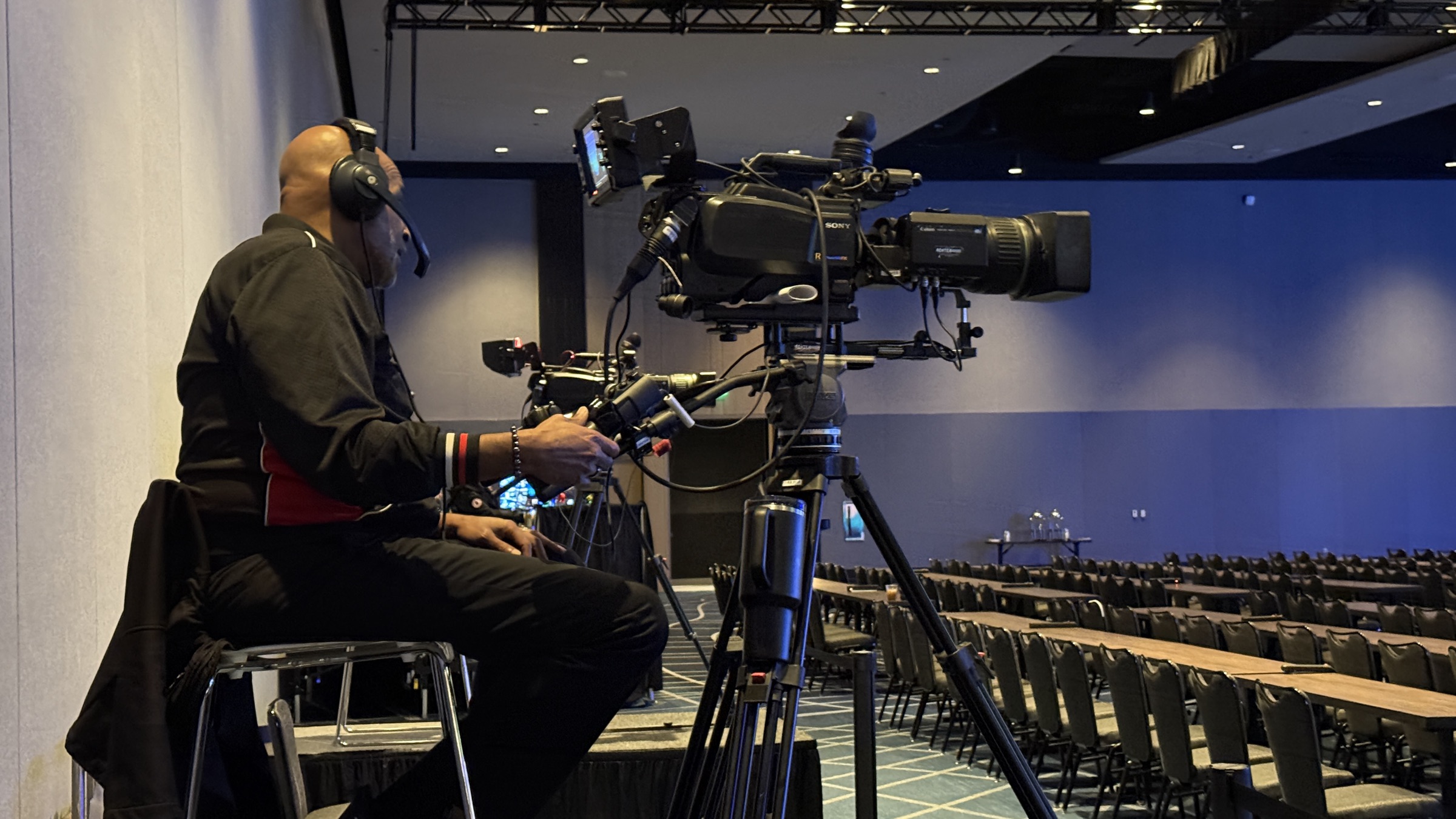
Hybrid services include cameras, operators, and the tripods, lenses, and signal infrastructure to get every shot to the switcher. For hybrid, expect a minimum of two angles — typically a wide shot and a tight speaker shot.
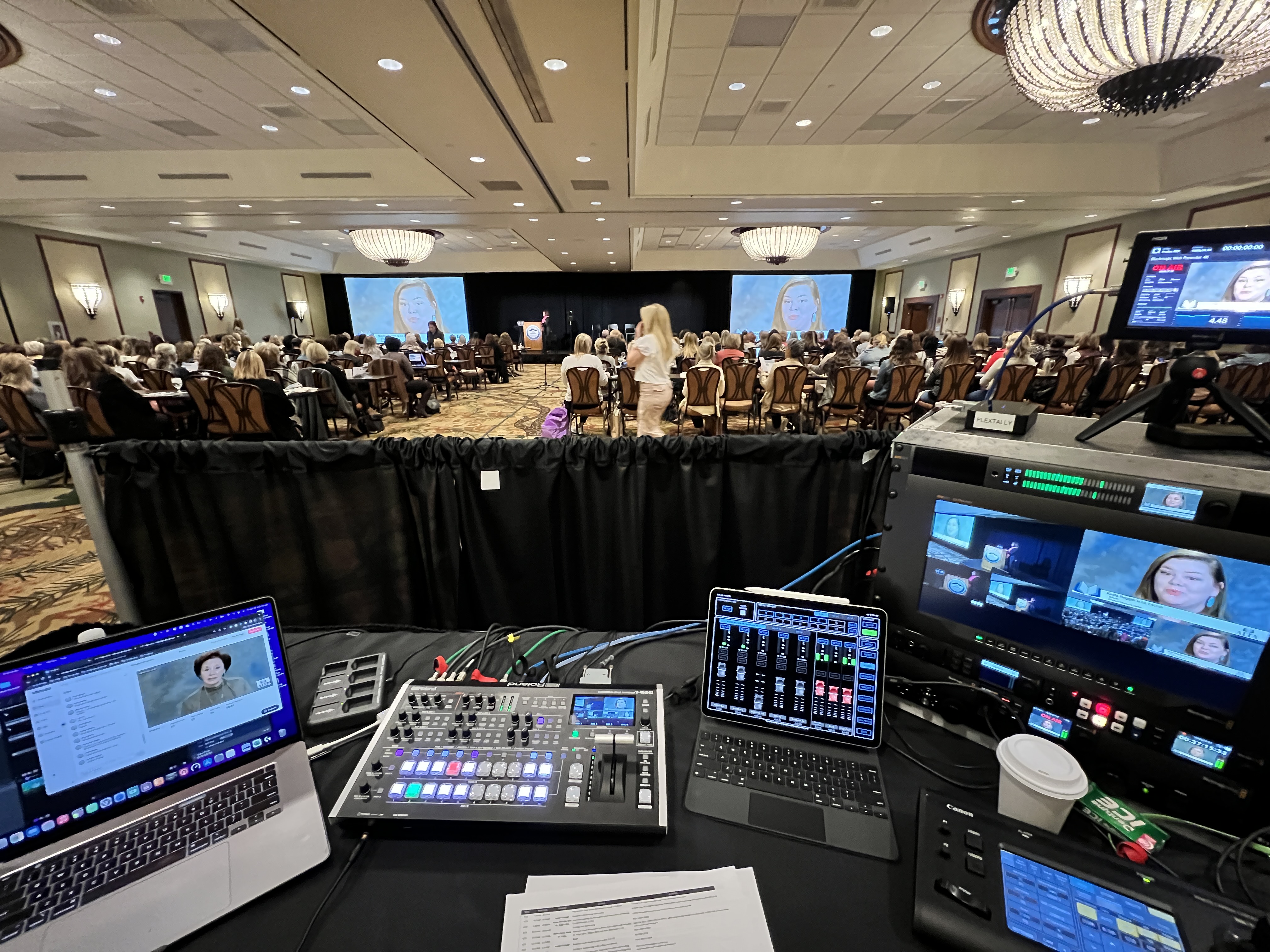
On most of our hybrid events we run Canon CR-N500 PTZ cameras, which one operator can steer from the production desk, plus manned cameras where the event calls for reactive shots — panels, audience Q&A, awards moments. The package should state camera count and whether operators are included, because "three cameras" with nobody driving them is a very different service than three operated angles. It should also cover confidence monitors or IMAG feeds if your in-room audience needs screens.
A hybrid audio package includes presenter microphones, a digital mixing console, and — the part that separates professionals from hopefuls — a dedicated stream mix built separately from the room mix.
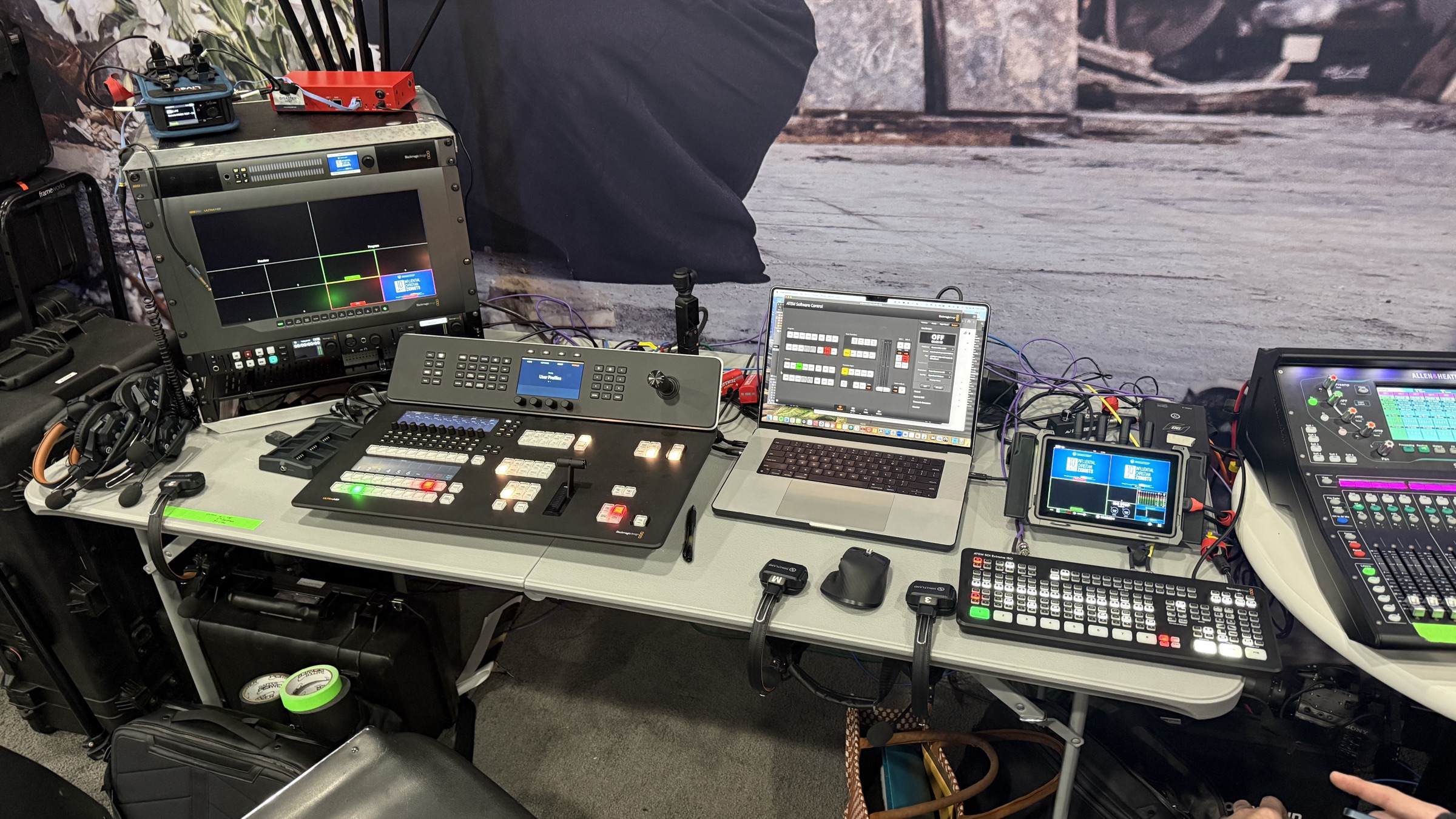
In practice that means wireless mics (we carry Sennheiser), a console like the Allen & Heath SQ5, and an engineer who owns both outputs all day. The room mix is tuned for the space; the stream mix is direct, clean, and compressed for laptop speakers and earbuds. If a vendor plans to feed the stream from the house PA, remote viewers will hear a swimming pool. Audio is the single highest-stakes line in the scope — I've written a whole post on getting livestream audio right because it's where hybrid events most often live or die.
The production core of any hybrid service is live video switching: cutting between cameras, slides, videos, and remote presenters in real time, with graphics that keep the stream oriented. This is what makes the broadcast feel produced instead of surveilled.
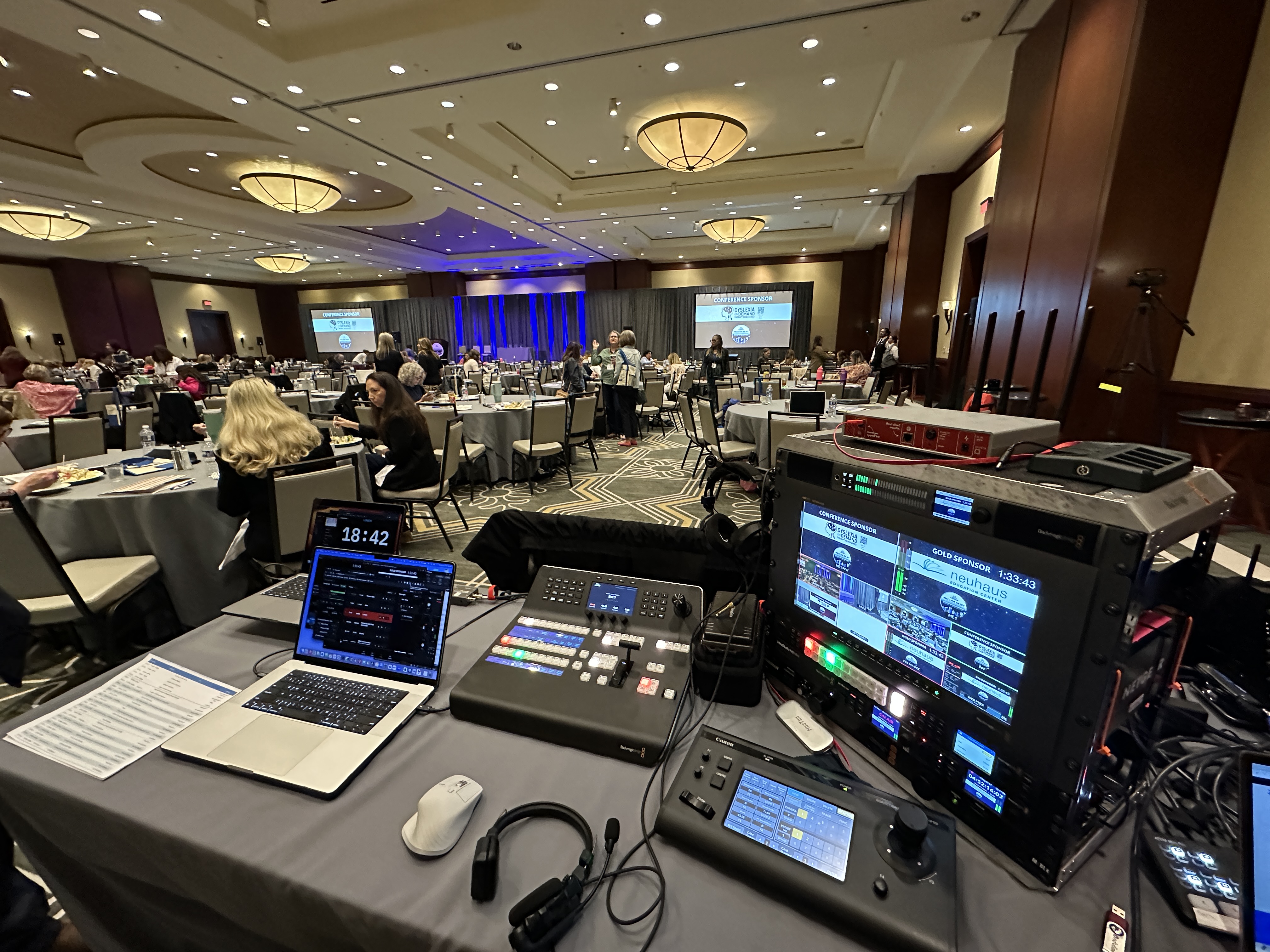
Our switching package runs on Blackmagic ATEM hardware and includes lower thirds (name and title graphics), a branded holding screen, clean playback of any videos in your agenda, and picture-in-picture layouts for panels or slide-heavy sessions. Remote presenter integration belongs in this section of the scope too: bringing a speaker in over Zoom or Teams, putting them on the room screens, and feeding their audio to both mixes. It's routine work when it's planned — and chaos when it's improvised.
The streaming portion covers encoding your program feed, delivering it to your platform, and having a human actively managing that delivery for the duration of the event. The platform is your choice — Zoom, Teams, YouTube, a private portal — and a good vendor works with whatever your audience already uses.
Scope items to look for: a hardware encoder, a tested primary internet path, a backup path — we carry a LiveU Solo Pro bonded cellular unit so the stream survives a venue internet failure — and a crew member monitoring the actual output the way a viewer sees it. Private or secure streams for internal meetings, like town halls, should also be spelled out here: registration, passwords, or embed restrictions as your comms policy requires.
Hybrid services should include the tools and the staffing that let remote attendees participate — not just watch. This is the layer that makes an event genuinely hybrid rather than an in-person meeting with a broadcast.
Typical inclusions: live Q&A collection from the stream, polls that both audiences answer, and a moderator who watches chat, filters questions, and gets them to the stage host. On smaller events the stream monitor doubles in this role; on larger ones it's a dedicated seat. If your event has no plan for remote questions, your remote attendees will notice — they always do.
Every hybrid quote should name its crew, because crew is where the service actually lives. Two operators is the floor for hybrid; conferences typically run three or four.
The standard seats: a technical director on the switcher, an audio engineer on both mixes, camera operators as needed, and stream/engagement coverage as described above. When you compare quotes, compare seats — a lower price with one fewer crew member isn't the same service at a discount; it's a different service. I break down how to read those differences in what's included in a corporate livestream package, which pairs well with this post if you're comparing hybrid against streaming-only scopes.
A complete hybrid service includes a recording of the full program feed — the switched, mixed broadcast, not a raw camera file. For most clients this is the sleeper asset in the whole package.
Standard deliverables run from a same-week download link to trimmed session files, chaptered replays for on-demand viewing, and viewership reporting from the streaming platform. If you plan to cut the content into clips for marketing or training, say so during scoping — it affects how we record. Ask every vendor exactly what file you get and when; "we'll send the recording" has a dozen meanings.
Some things sit outside a standard hybrid package, and it's better to know the line up front. None of these are upsells for their own sake — they're real scope with real labor attached.
Common add-ons: a dedicated setup-and-rehearsal day, generally $2,250–$3,750, and worth it for anything with executives or a board on stage; multi-day coverage, which moves conferences into the $11,000–$30,000+ range; edited highlight reels and social clips; LED walls or projection beyond standard confidence monitors; and breakout-room coverage, which is effectively additional simultaneous productions. For context on how the core numbers move, here's my full breakdown of what it costs to livestream an event. Most single-day hybrid productions land in the $5,000–$15,000 range all-in.
If you're scoping a hybrid event and want to know exactly which of these services your agenda actually needs — and which you can skip — grab 20 minutes with me. I'll give you a straight read on scope and budget, no pitch attached.
A complete package covers pre-event planning and venue assessment, a multi-camera package with operators, presenter mics with separate room and stream mixes, live video switching with graphics, managed streaming with a backup internet path, virtual Q&A support, and a recording of the full broadcast.
Most single-day corporate hybrid events generally land between $5,000 and $15,000 depending on camera count, crew size, and engagement complexity. Multi-day conferences typically run $11,000–$30,000+, and a dedicated rehearsal day generally adds $2,250–$3,750.
The service includes delivering and managing the stream on your platform — Zoom, Teams, YouTube, or a private portal. Platform licensing itself is usually yours, since it's tied to your organization's accounts, but we handle setup, testing, and day-of operation.
It should be — specifically a recording of the switched program feed with the clean stream mix, delivered as a downloadable video file. Confirm the format and delivery timeline with any vendor; raw unswitched camera files are not the same deliverable.
Two is the practical minimum — a technical director and an audio engineer. Conferences and multi-camera events typically run three to four, adding camera operators and a dedicated stream monitor or virtual moderator. The quote should name the seats.
Yes — it's common. Venue AV often owns the room (PA, projection, lighting) while we own the broadcast: cameras, switching, stream mix, and delivery. The key is defining that handoff in pre-production, including a feed from their console into our mix.
That's a scoping item, not a surprise. We test bandwidth in advance and carry a bonded cellular backup encoder, so the stream has a second path if house internet drops mid-show.
Yes — remote presenters are brought into the switcher so they appear on the in-room screens and in the stream with clean audio in both mixes. We tech-check each remote presenter before the event, which is one more reason the rehearsal window matters.